
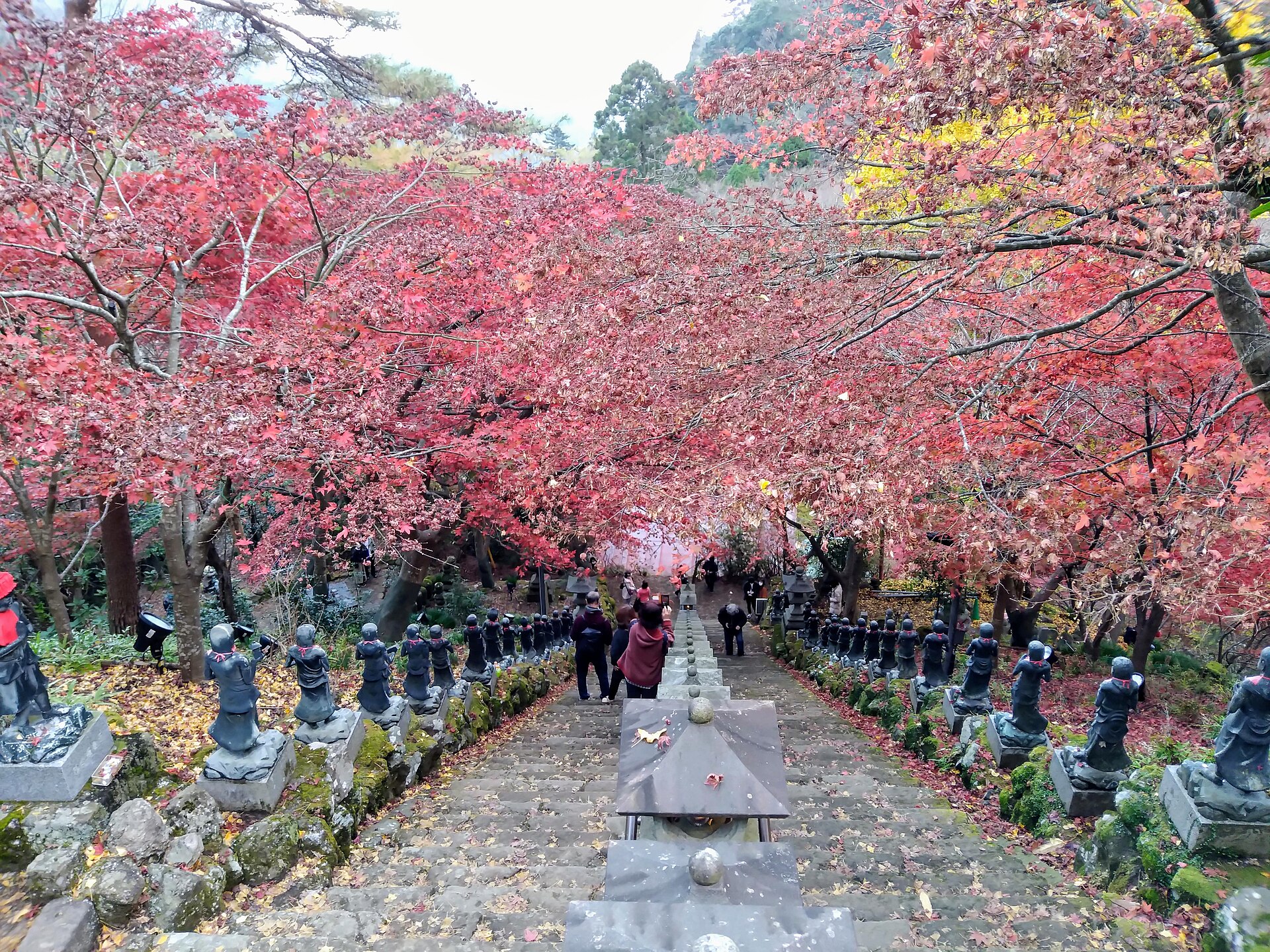
Mount Oyama in Autumn: Maple Steps, Tofu and a Sea View an Hour from Tokyo
One hour from Shinjuku, a sacred mountain turns red every November. Mount Oyama in Kanagawa has drawn pilgrims from Tokyo for more than 250 years, and in autumn its old temple steps disappear under a tunnel of maple leaves. On weekends the cable car queue is full of Japanese day-trippers. International visitors are still rare.
This guide covers how to get there, when the leaves peak, the evening light-up, and what to eat once you reach the top.
Why Oyama in autumn?
In the Edo period, a trip to Oyama was one of the most popular pilgrimages for ordinary people in Tokyo (then called Edo). At its peak in the mid-1700s, the mountain is said to have welcomed hundreds of thousands of visitors a year (Tabi-Mag). This “Oyama Mairi” pilgrimage was designated a Japan Heritage story in 2016 (Visit Kanagawa).
The mountain’s other name, Afuri-yama, is often linked to the word for rain, and farmers once climbed it to pray for good harvests. Today it offers something simpler:
- Real autumn color, close to Tokyo: maples around the temple and shrine usually peak from mid to late November
- A short, easy climb: a cable car does most of the work, so you don’t need to be a hiker
- A view to the sea: on a clear day, the shrine looks out over Sagami Bay
- Tofu and temple lodges: pilgrim inns still serve meals built around local tofu
How to get to Oyama from Tokyo
- Train: take the Odakyu Line from Shinjuku to Isehara Station, about an hour
- Bus: from Isehara Station North Exit (bus stop 4), take a bus to the “Oyama Cable” terminal, about 30 minutes (Isehara Tourism Association)
- Walk: from the bus terminal, walk about 15 minutes up the Koma-sando, a stepped lane of tofu restaurants and souvenir shops, to the cable car station
- Cable car: the Oyama Cable Car climbs to Afuri-jinja Station in about 6 minutes, stopping at Oyamadera Station on the way. It runs every 20 minutes, from 9:00 to 16:30 on weekdays and 9:00 to 17:00 on weekends, with longer hours in autumn. Fares are ¥640 one way or ¥1,270 round trip, and you can tap a contactless credit card at the gate (Oyama Cable Car)
Best value pass: the Tanzawa-Oyama Freepass A costs ¥2,520 from Shinjuku and covers your round trip on the Odakyu Line, local Kanachu buses and the Oyama Cable Car for two days. Add ¥750 for a reserved Romancecar seat to Isehara (Odakyu).
Oyama-dera: the maple staircase
Oyama-dera is a Buddhist temple founded in 755, about halfway up the mountain (Odakyu). Its long stone staircase is lined with maples, and in late autumn, walking up it feels like climbing through a red and gold tunnel. This is the photo most Japanese visitors come for.
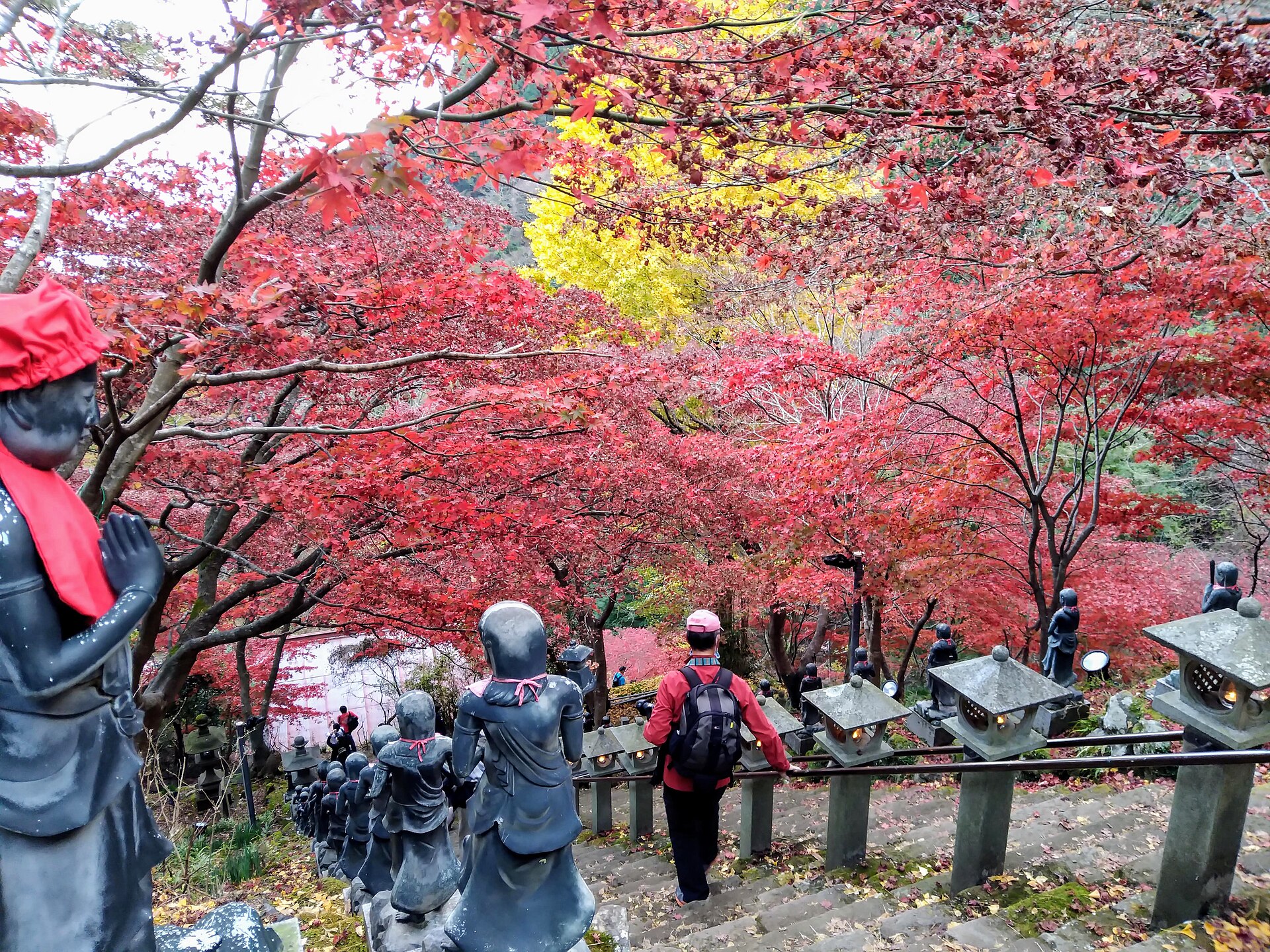
You can reach the temple from Oyamadera Station, one stop up the cable car, or walk up from the bottom on the old pilgrim path. Allow 30 to 60 minutes if you walk.
Afuri Shrine: a view over Sagami Bay
At the top of the cable car, about 700 meters above sea level, sits the Lower Shrine of Oyama Afuri Shrine (Tabi-Mag). Turn around at the top of the steps and the whole Kanto Plain opens up below you, with Sagami Bay beyond. The view has two stars in the Michelin Green Guide Japan (Odakyu).
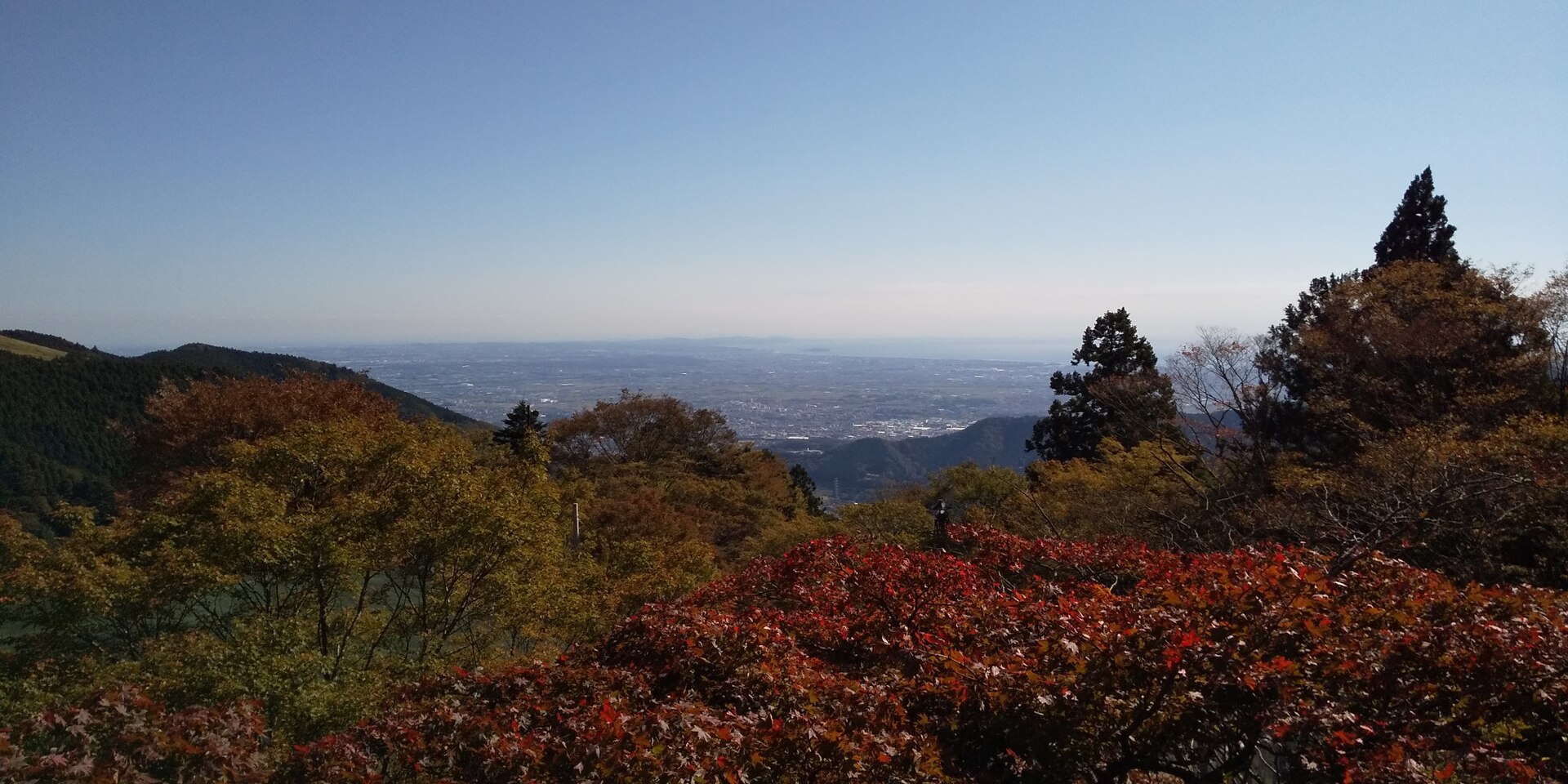
Feeling energetic? The summit (1,252 m) is about 90 minutes’ climb from the Lower Shrine on a steep, rocky trail. Wear proper shoes and start down well before dark.
Autumn light-up 2026
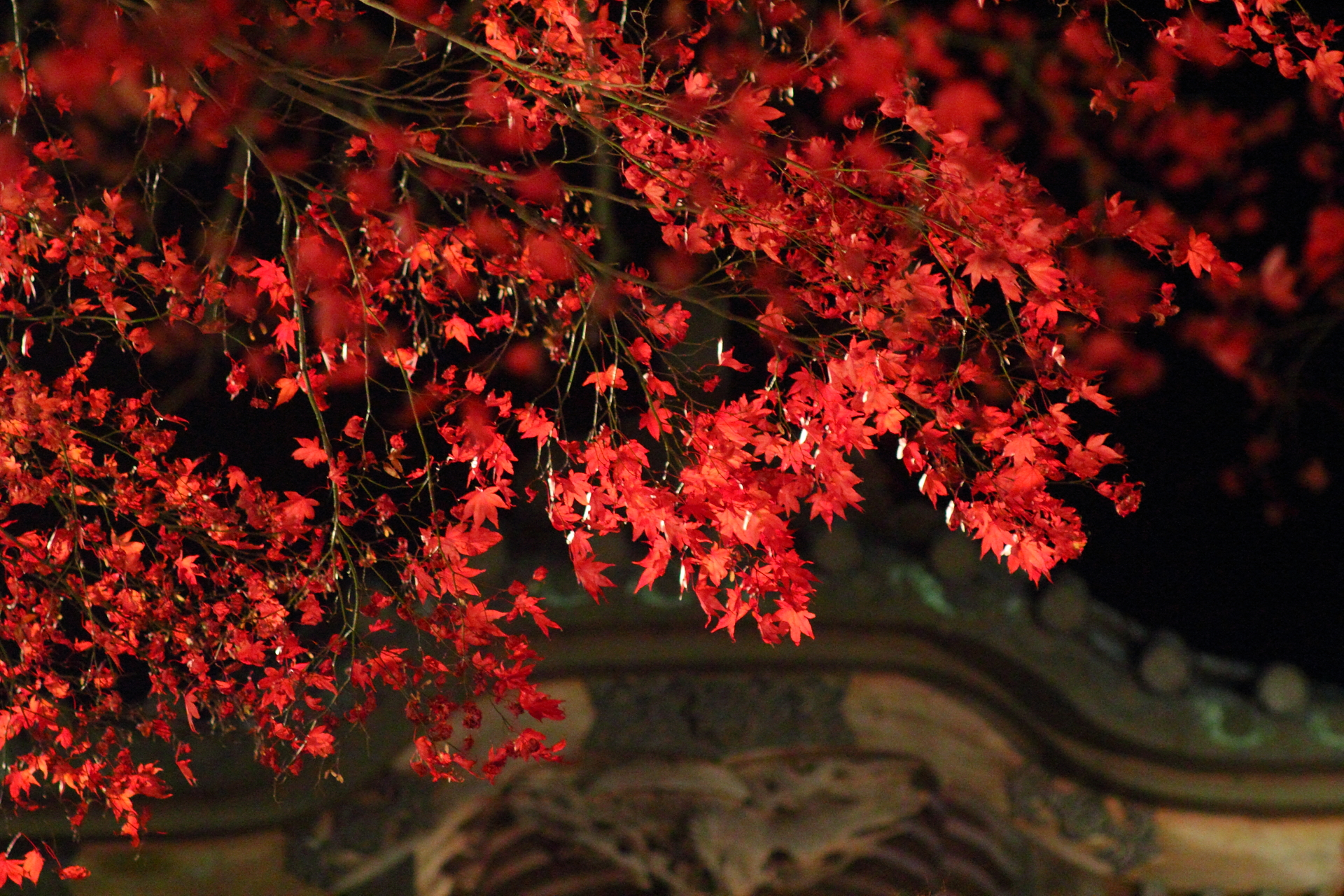
From Friday, November 20 to Sunday, November 29, 2026, the maples around Oyama-dera and the Lower Shrine are lit up after dark (Isehara Tourism Association).
- Hours: sunset to 19:00 on weekdays, sunset to 20:00 on weekends and holidays
- Night cable car: the cable car runs late during the light-up, so you can ride up at dusk
- Go on a weekday if you can: weekends are busy, and parking can take 2 to 3 hours. Take the train and bus instead
What to eat: Oyama tofu
Oyama’s clear mountain spring water made the area famous for tofu. Restaurants along the Koma-sando serve tofu set meals, from simple chilled tofu to full courses of tofu dishes.
To make a night of it, stay at one of the shukubo, pilgrims’ lodges that have hosted travelers since the Edo period. About 50 are still in business, and most serve dinners built around local tofu (Visit Kanagawa).
A one-day Oyama itinerary from Tokyo
- Morning: leave Shinjuku around 8:00. Take the bus from Isehara and walk up the Koma-sando
- Late morning: ride the cable car to Afuri-jinja Station. Visit the Lower Shrine and take in the view
- Lunch: tofu set meal near the shrine or back down on the Koma-sando
- Afternoon: walk down to Oyama-dera and the maple steps, then ride the cable car back from Oyamadera Station
- Light-up option: from November 20 to 29, stay until dusk for the illuminated maples before heading home
Practical tips
- Arrive early: cable car lines are longest late morning on weekends
- Wear good shoes: the temple steps and shrine stairs are steep and can be slippery when wet
- Bring layers: it is noticeably colder on the mountain than in Tokyo, especially after sunset
- Carry some cash: small shops and shrines may not take cards
- Check the leaves: color varies each year. Mid to late November is usually best, and forecasts for 2026 point to the end of the month
FAQ
When is the best time to see the autumn leaves at Oyama?
Usually mid to late November. In 2026, the light-up runs from November 20 to 29.
Can I visit Oyama as a day trip from Tokyo?
Yes. It takes about two hours from Shinjuku to the top of the cable car, so a day trip is easy.
Do I need to hike?
No. The cable car takes you to both the temple and the shrine. Hiking to the summit is optional.
Is Oyama crowded?
Weekends in November are busy with Japanese visitors, but it is far quieter than Kyoto or Nikko. Weekdays are calm.
Planning more time outside Tokyo? See our guide to hidden Kanagawa, or head north to Snow Country this winter.
Cover photo: KQuhen / Wikimedia Commons (CC BY-SA 4.0)
Get hidden Japan in your inbox every week
One hidden place worth the trip, what’s new and seasonal, and practical tips from the ground. Free.